Keywords
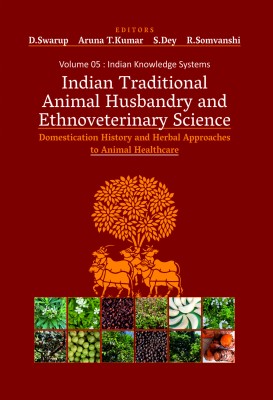
Animal Husbandry in India, Indigenous Traditional Knowledge in animal care, Ethnoveterinary Medicine practices, Ayurveda-based veterinary care, Pashu Ayurveda, ancient Indian animal management, zoopharmacognosy, herbal remedies for livestock, Ayurvedic formulations for animals, Shalihotra and animal health, Vedic animal husbandry concepts, Ramayana and animal care traditions, herbo-mineral combinations in veterinary medicine, phytopharmacology for animals, herbal drug development for livestock, reverse pharmacology in animal care, animal-assisted therapy in India, One Health framework and animal sciences, traditional herbal therapies for animals, Ayurvedic animal health practices, historical animal management practices, cultural dimensions of animal care in India, traditional zootherapy methods, herbal gardens for animal healthcare, veterinary applications of Vedic texts, Ayurveda and animal healthcare, animal self-medication in ancient India, Buddhist teachings on animal care, Jain principles in animal husbandry, Ayurvedic veterinary medicine in modern IndiaIndian Traditional Animal Husbandry and Ethnoveterinary Science: Domestication, History and Herbal Approaches to Animal Healthcare: Volume 05 : Indian Knowledge Systems - Volume 05
edited by: D.Swarup, Aruna T.Kumar, S.Dey & R. SomvanshiLength: 152 mm | Breadth: 33.4 mm | Height: 229 mm | Imprint: NIPA | Weight: 1200 GMS
The domestication of animals marks a transformative chapter in human history, deeply influencing lifestyles, livelihoods, and relationships with nature. In India, animal husbandry is more than an economic activity—it is a cultural tradition rooted in values of care and compassion, as reflected in the principle of Ahimsa found in Vedic texts, epics like the Ramayana and Mahabharata, and Buddhist and Jain teachings. This interdisciplinary volume, comprising twelve chapters, explores the historical evolution, cultural dimensions, and scientific relevance of traditional animal management practices in India. A central focus is Indigenous Traditional Knowledge (ITK) and Ethnoveterinary Medicine (EVM), which include time-tested practices using herbs, minerals, herbo-mineral combinations, and ethnozoological remedies. These approaches are grounded in centuries-old wisdom and resonate with the modern science of zoopharmacognosy—the study of animals’ self- medicative behavior—traced to ancient Indian scriptures.
The book offers an in-depth exploration of Ayurveda-based veterinary care (Pashu Ayurveda), outlining its origins, core principles, and continued relevance. It highlights the contributions of ancient scholars such as Shalihotra, Nakul, Palkapya, Jayadatta, Charaka, Sushruta, Jivaka, and Vagbhata, while also discussing the practical application of Ayurvedic formulations in contemporary livestock management—showcasing India's rich legacy in animal health sciences. Concepts from classical texts are shown to align with modern approaches like reverse pharmacology, animal- assisted therapy, and the One Health framework. The chapters further examine phytopharmacology and the scientific validation of traditional herbal therapies, offering insights into pathways for herbal drug development. Practical considerations, such as the design and utility of herbal gardens, are also addressed, emphasizing their therapeutic, educational, and conservation value. Richly illustrated with photographs and visual material, the book captures the socio-cultural and ritual importance of domestic animals in Indian life—spanning rural livelihoods, festivals, and temple practices. Detailed images of medicinal plants and herbal gardens serve as a valuable resource for those engaged in ethnobotany, veterinary care, and biodiversity conservation.
This comprehensive reference is intended for students, scholars, and practitioners in veterinary science, ethnobotany, rural development, and complementary medicine. It also serves traditional knowledge holders, policy makers, and researchers interested in sustainable animal healthcare systems rooted in indigenous practices.
Dr D. Swarup, MVSc, PhD (Veterinary Medicine), is a distinguished veterinary scientist with over 34 years of service in the Indian Council of Agricultural Research (ICAR), internationally recognized for his pioneering contributions to ethnoveterinary medicine (EVM) and herbal veterinary therapeutics. He successfully led eight major research programs, notably serving as the veterinary lead for the World Bank-funded ICAR-NATP Mission Mode project on Indigenous Technical Knowledge and as National Coordinator and Principal Investigator of ICAR’s Ad-hoc Scheme and Outreach Program on EVM. His work has rich contribution to the scientific validation and integration of traditional herbal practices into mainstream veterinary healthcare. Dr. Swarup has significantly advanced the development of herbal veterinary formulations, contributing to three patents for novel antimicrobial agents and an herbal preparation for managing fluorosis in animals. With over 200 scientific publications and numerous awards and honours—including the ICAR- Hariom Ashram Trust Award and IHRS National Gold Medal for Research in Herbal Veterinary Medicine—he has also served on several high-level expert committees such as the National Advisory Committee for Animal Husbandry and Dairying, and CPCSEA (Government of India), and was the President of the Indian Society for Veterinary Medicine. His contributions have been instrumental in shaping national policy, promoting research, and fostering sustainable animal health practices grounded in traditional knowledge systems.
Dr Aruna T. Kumar is a distinguished expert in animal husbandry and agricultural mass communication, with MSc (Animal Nutrition, GBPUAT, Pantnagar), PhD from CCS University, Meerut (thesis _Animal Husbandry in Ancient Indian Literature—Implications for Modern Science published by LAP, Germany) and a postgraduate diploma in Mass Communication from Bhartiya Vidya Bhavan, New Delhi. With over three decades of service at the Indian Council of Agricultural Research (ICAR), including as Chief Editor (English), she played a pivotal role in modernizing agricultural and veterinary publishing and strengthening scientific communication through research journals, handbooks, and academic textbooks. A prolific editor and consultant, she has contributed to key projects, viz., NATP, NAIP and FFP of ICAR, edited India’s top-ranking The Indian Journal of Animal Sciences (1984–2020); publications from FAO, ILRI, CIMMYT, TAAS; and currently serves as Consultant Editor with NIPA. Her editorial leadership includes developing e-publishing systems, conducting editorial trainings, and aligning book acquisitions with Agricultural Education Division, ICAR. Her work reflects a unique blend of subject matter expertise in animal sciences and exceptional editorial acumen in agricultural communication.
Dr S. Dey MVSc, PhD (Veterinary Medicine), currently serving as Professor and Head of Clinical Veterinary Medicine at Bihar Veterinary College, is a distinguished researcher with over three decades of contribution to ethnoveterinary science and herbal medicine. His work focuses on bridging traditional knowledge with modern scientific approaches, particularly in validating the efficacy and safety of medicinal herbs used in Indian traditional animal healthcare systems. He has served in key positions within ICAR, including as Principal Scientist and Acting Head, Division of Medicine at ICAR-IVRI, and as National Coordinator of the ICAR Network Programme on Ethnoveterinary Medicine. His research has led to the development of four herbal technologies and a patented formulation for combating fluoride toxicity. His interdisciplinary work has identified bioactive phytochemicals that offer therapeutic potential for disorders affecting the pancreas, kidneys, cardiovascular system, and skin. Dr Dey has authored over 119 research papers in international journals, four technical manuals, two book chapters, and is also a contributory author to a book on Ethnoveterinary Science and Indian Traditional Animal Husbandry. He has delivered 21 international presentations and guided 18 Master’s and 11 Doctoral students in research on medicinal plants and herbal therapeutics.
Dr R. Somvanshi, MVSc, PhD (Veterinary Pathology), FRCVS (Sweden), Diplomat, ICVP, is a distinguished Veterinary Pathologist whose pioneering contributions have significantly advanced the understanding of animal diseases and the history of veterinary science in India. With over four decades of rich experience in animal disease research, diagnosis, and postgraduate teaching, he has held prestigious positions including Joint Director, CADRAD (Acting), Head of the Division of Pathology, ICAR-National Fellow, ICAR-Emeritus Scientist and ICAR-Emeritus Professor at IVRI. Dr Somvanshi is widely recognized for his extensive scholarly work on the evolution of veterinary medicine and animal husbandry in ancient India, having authored several books and articles on the subject. He played a pivotal role in organizing the NAVS First Conference on Veterinary Medicine in Ancient India, and was instrumental in establishing the National Museum of Veterinary and Animal Sciences at IVRI. Dr Somvanshi received over two dozen national awards, including the DST Dr Meghnad Saha Award (thrice), ICAR Dr Rajendra Prasad Award (twice), UP Government S&T Vigyan Ratna Award and the IAVP Dr N.C. Jain Lifetime Achievement Award, along with fellowships from five national scientific societies. He also served as elected President of Indian Association of Veterinary Pathologists.
About Other Contributors
Dr S.K. Kumar, BAMS, MD (Dravyaguna), PGDCR, PGDOH, is the Medical Director at The School of Ancient Wisdom’s Ayurveda Hospital in Bengaluru, with over 20 years of experience in Ayurveda spanning clinical practice, research, and academics. Currently pursuing a PhD, he specializes in Veterinary Ayurveda, Vrikshayurveda, and Panchakarma therapies, and has guided 27 postgraduate diploma students. A prolific contributor to the field, he has authored 18 research papers, four books, and three book chapters, and presented at over 30 national and international forums. Dr Kumar is a visiting faculty at The University of Trans-Disciplinary Health, Sciences and Technology (TDU), a consultant to dairy and pharma sectors, and a member of global bodies like the World Ayurveda Foundation and the Romanian Ayurveda Academy. He has delivered international lectures across eight countries, conducted research on ethnoveterinary medicine and antimicrobial resistance, and received a CCRAS grant for his postgraduate thesis. Fluent in four languages, he is passionate about Ayurvedic research, and traditional knowledge systems.
Dr P.Tripathi, MSc, PhD (Agronomy) is a Principal Scientist (Agronomy) at the ICAR–Indian Institute of Soil Science (IISS), Bhopal. He holds a PhD in Agronomy, with his doctoral research focused on “Residue Management Studies in Wheat–Rice System.” Prior to his tenure at IISS, he served at the ICAR–Central Institute for Research on Goats (CIRG), Makhdoom, where he was actively involved in research on fodder crops, silvi-pastoral systems, and the establishment of herbal and multi-purpose plant gardens in rugged and marginal soils—experience that directly contributes to his expertise in medicinal and aromatic plant cultivation and herbal garden development. At present, Dr Tripathi is engaged in research on conservation agriculture and natural resource management, with continued interest in sustainable land use, plant-soil interactions, and integrated cropping systems. He has published over 45 research papers in national and international journals and has guided seven M.Sc. (Ag.) students in their thesis research. His broad agronomic expertise and practical experience in land rehabilitation and plant-based systems make him a valuable contributor to projects involving thematic herbal gardens and biodiversity conservation.
Dr Ananya Dan, MSc, PhD (Organic chemistry). Dr Dan earned her PhD from the University of Calcutta, India, in 2001. With nine years of post-doctoral research experience, she has published over 27 research articles in high-impact, peer-reviewed journals. She has presented her work at numerous national and international scientific forums and conferences. Her research primarily focuses on phytochemistry, with a particular emphasis on activity-guided isolation and purification of secondary plant metabolites. Her work aims to counteract the harmful effects of toxic heavy metals and address the multisystemic complications of diabetes. The majority of her research projects have been funded by the Council of Scientific and Industrial Research (CSIR), India. Throughout her academic and research career, Dr Dan has received several awards and research grants in recognition of her contributions to science. She is a life member of the Indian Science Congress.
Chapter 1 Human-Animal Interactions and Animal Domestication D. Swarup
Chapter 2. Brief History, Socio-Economic Roles, and Current Status of Domestic Animals in India D. Swarup
Chapter 3. Traditional Animal Husbandry Practices in India ArunaT. Kumar and R. Somvanshi
Chapter 4. Traditional Knowledge, Ethnoveterinary Medicine and Early Animal Healthcare Practices D. Swarup
Chapter 5. Zoopharmacognosy and Ethnoveterinary Materia Medica D. Swarup
Chapter 6. Ethnoveterinary Medicine in India: Current Status and Future Prospects D. Swarup and R. Somvanshi
Chapter 7. Evidence Based Ethnoveterinary Medicine S. Dey
Chapter 8. Overview of Ayurvedic System of Human and Animal Healthcare and Well-Being by S.K. Kumar
Chapter 9. Origin, Principles, and Practices of Veterinary Ayurveda (Pashu Ayurveda):Historical Overview and Scientific Relevance R. Somvanshi and Aruna T. Kumar
Chapter 10.Phytopharmacology,Scientific Researchand Developmentin Herbal Veterinary Medicine S. Dey and Ananya Dan
Chapter 11. Veterinary Herbal Drug Development: Regulatory Aspects S. De
Chapter 12. Designing Herbal Gardens for Health and Heritage:Thematic Approaches to Cultivation, Harvesting, and Post-Harvest Practices P. Tripath