Keywords
Beneficial Insects, Apiculture, Sericulture, Lac Culture, Pollinators in Agriculture, Biological Pest Control, Natural Farming Systems, Honey Bee Biology, Beekeeping Techniques, Silkworm Rearing, Mulberry Cultivation, Pollinator Conservation, Integrated Pest Management, Ecological Balance, Insect Ecology, Sustainable Agriculture, Indigenous Technical Knowledge, Beneficial Insect Management, Organic Farming Practices, Crop PollinationBeneficial Insects and Apiculture
authored by: Anil KurmiLength: 152 mm | Breadth: 20 mm | Height: 229 mm | Imprint: CONTENT VIBES | Weight: 850 GMS
This book will be available from 15-Aug-2026
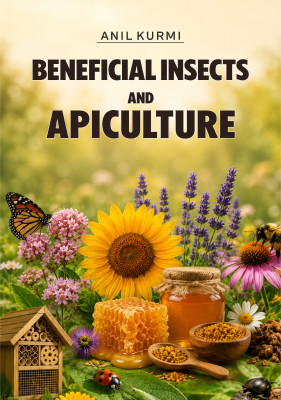
Beneficial Insects and Apiculture provides a comprehensive introduction to the ecological, agricultural, and economic importance of beneficial insects in sustainable farming systems. The book explains the role of insects in pollination, biological pest control, decomposition, soil improvement, and maintenance of ecological balance. It covers essential topics such as insect ecology, life cycles, population dynamics, pollinator conservation, habitat management, and the role of natural enemies in integrated pest management. Special emphasis has been given to apiculture, sericulture, and lac culture, including honey bee biology, beekeeping techniques, seasonal colony management, silkworm rearing, mulberry cultivation, and lac production.
The text also highlights indigenous technical knowledge and traditional insect-based farming practices that support eco-friendly agriculture. Written in a clear and systematic manner, the book is designed for students, teachers, researchers, extension workers, and farmers interested in entomology, natural farming, and sustainable agriculture. It serves as a valuable resource for academic learning, competitive examinations, and practical field applications related to beneficial insects and allied agro-based industries.
Dr. Anil Kurmi is currently working as a Scientist (Plant Protection) at KrishiVigyan Kendra (KVK), Indira Gandhi National Tribal University, Amarkantak, where he is actively engaged in applied research, field-level validation and technology dissemination in the domain of crop protection. He obtained his B.Sc. (Agriculture), M.Sc. (Agriculture) in Entomology, and Ph.D. in Entomology from Jawaharlal Nehru KrishiVishwaVidyalaya, Jabalpur, India.Dr.Kurmi is a trained Entomologist with over eight years of professional experience in agricultural research and extension services. His core areas of interest include integrated pest management (IPM), insect pest ecology, bio-intensive pest management, and sustainable agricultural practices. His work primarily focuses on developing eco-friendly, economically viable, and location-specific pest management strategies that are easily adoptable by farmers.He has published numerous peer-reviewed research papers in reputed national and international journals and has also contributed to technical bulletins, extension literature, and advisory services for farmers.
He has been actively involved in conducting frontline demonstrations, on-farm trials, and capacity-building programmes aimed at transferring improved technologies from laboratory to field conditions.Dr.Kurmi has played a key role in organizing farmer trainings, awareness programmes, and field days, directly interacting with farming communities to address practical agricultural challenges. His extension approach emphasizes participatory methods, ensuring that scientific innovations are effectively translated into farmer-friendly solutions.His work is characterized by a strong commitment to bridging the gap between research and real-world application. By promoting eco-compatible, low-cost, and sustainable crop protection practices, he contributes significantly to enhancing agricultural productivity, environmental safety, and livelihood security of farmers. Through his continuous efforts in research, extension, and knowledge dissemination, he is contributing to the development of resilient and sustainable agricultural systems.
Chapter 1. Introduction to Beneficial Insects
Chapter 2. Ecological Understanding of Insects
Chapter 3. Insect Life Cycles and Development
Chapter 4. Population Dynamics of Insects
Chapter 5. Decomposer Insects in Natural Farming
Chapter 6. Pollinators in Natural Farming Systems
Chapter 7. Conservation and Management of Pollinators
Chapter 8. Natural Enemies of Insect Pests
Chapter 9. Insects in Ecological Communities
Chapter 10. Insects as Food, Soil Builders, and Aesthetic Agents
Chapter 11. Habitat Management for Beneficial Insects
Section IV. Apiculture (Bee Keeping)
Chapter 12. Honey Bee Biology
Chapter 13. Beekeeping Techniques and Equipment
Chapter 14. Seasonal Management and Bee Pasturage
Chapter 15. Diseases and Enemies of Honey Bees
Chapter 16. Role of Pollinators in Crop Production
Chapter 17. Silkworm Biology and Rearing
Chapter 18. Mulberry Cultivation and Silkworm Management
Chapter 19. Lac Insect Biology and Production
Chapter 20. Indigenous Knowledge and Historical Importance of Beneficial Insects