Keywords
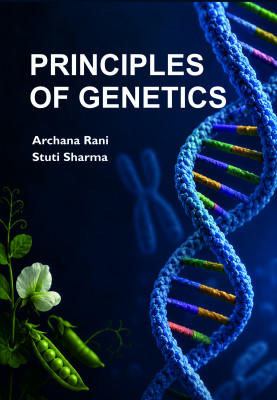
Mendel’s laws (segregation, independent assortment), Test cross & back cross, Probability rules & Chi-square (goodness-of-fit), Dominance: complete, incomplete, codominance,Epistasis (9:7, 12:3:1, 9:3:4, 15:1, 13:3), Multiple alleles, pleiotropy, pseudoalleles, Sex determination (XX-XY, XO, ZZ-ZW) & sex linkage; sex-limited/influenced, Chromosome architecture (centromere, telomere, NOR, chromomere), Special chromosomes (polytene, lampbrush, B-chromosomes),Cell cycle, mitosis, meiosis & nondisjunction, Linkage & recombination frequency (cM), Crossing over, interference & coefficient of coincidence, Chromosomal aberrations (deletion, duplication, inversion, translocation) Aneuploidy vs polyploidy; haploids/double haploids (colchicine, androgenesis),Mutations: point/frameshift; transition/transversion; physical/chemical mutagens, DNA vs RNA types; replication (semi-conservative; key enzymes),Transcription & translation (codon, wobble), Gene regulation (lac/trp operon; promoters/enhancers/repressors),Cytoplasmic inheritance (mtDNA, cpDNA; maternal effects), Model organisms (Drosophila, Arabidopsis, pea, E. coli, mouse) and their uses,ICAR 6th Deans SyllabusPrinciples of Genetics
authored by: Archana Rani & Stuti SharmaLength: 152 mm | Breadth: 16.5 mm | Height: 229 mm | Imprint: CONTENT VIBES | Weight: 540 GMS
Built precisely on the 21-unit ICAR Sixth Deans' Committee syllabus, this book transforms the vast and concept-rich field of Genetics into concise, high-yield, and examination-focused learning material for undergraduate students of Agriculture and allied sciences. The text presents fundamental principles of classical, molecular, and quantitative genetics in a simple, systematic, and student-friendly manner while retaining scientific rigor and conceptual clarity.
Each chapter begins with crisp definitions, learning objectives, and key concepts, followed by classic experiments and contributions of model organisms that shaped modern genetics. Complex topics are simplified through diagram-first explanations, flowcharts, and concept maps, enabling students to visualize genetic processes and retain information more effectively.
The book provides worked examples and solved numericals on probability, Mendelian ratios, test crosses, pedigree analysis, and Chi-square (χ²) testing. Step-by-step protocols explain important techniques such as genetic mapping, mutation induction, doubled haploid production, and cytogenetic methods. Compare-and-contrast tables are extensively used to distinguish chromosome architecture, special chromosomes, mitotic and meiotic divisions, linkage and recombination, qualitative and quantitative inheritance, and mechanisms of gene regulation.
Special emphasis has been given to examination preparation through rapid revision tools, memory aids, summary tables, and question banks that closely reflect university and competitive examination patterns.
Key Features
• Strictly aligned with the ICAR Sixth Deans' Committee syllabus and course outcomes
• Crisp definitions, concept notes, and diagram-based explanations
• Classical experiments and model organism studies presented in exam-oriented formats
• Solved numericals on probability, Mendelian ratios, and Chi-square analysis
• Comparative tables for quick revision and conceptual clarity
• Stepwise protocols for genetic mapping, mutation induction, and doubled haploid production
• One-page summary sheets, flowcharts, and memory aids for rapid revision
• Chapter-end MCQs (single-best answer and numerical), Assertion–Reason, Match-the-Pairs, and Short Answer Questions with answer keys and explanations
• Useful for university examinations, ICAR, State Agricultural University examinations, and various competitive examinations in agricultural and biological sciences
By integrating conceptual understanding with problem-solving approaches and examination-oriented presentation, this book serves as a comprehensive learning and revision companion for students pursuing Genetics under the ICAR Sixth Deans' Committee framework, while simultaneously building a strong foundation for advanced studies and research in genetics and plant breeding.
Dr. Archana Rani is currently serving as a Senior Research Fellow in the Department of Plant Breeding and Genetics at Jawaharlal Nehru Krishi Vishwa Vidyalaya (JNKVV), Jabalpur, Madhya Pradesh. She holds both her Master’s and Doctoral degrees in Genetics from Rajendra Prasad Central Agricultural University, Pusa, Samastipur, Bihar, where she was awarded university fellowships for academic excellence throughout her postgraduate studies.
With nearly a decade of professional experience in agricultural research and academics, Dr. Rani has significantly contributed to several key research projects, including a Japan –funded JICA project on the Evaluation of promising soybean genotypes under excessive soil moisture conditions and the ICAR-funded CRP on Hybrid Technology in Wheat. Her teaching and research engagements have also extended to U.P. College (affiliated with LNM University, Darbhanga) and her alma mater in Pusa, Bihar.
A major milestone in her career is her association with the development of the wheat variety MP 3535. Her scholarly contributions are substantial, with over 30 research papers, 19 book chapters, and 27 extension articles published in reputed platforms. She is also the author of the academic book Agricultural Biotechnology – Concept and Practices, which reflects her expertise in the field. In recognition of her scientific contributions, Dr. Rani was honored with the Young Scientist Award at an international symposium held at Sido Kanhu Murmu University, Dumka, Jharkhand. Her active participation in 17 national and international seminars, symposia, and training programs further underscores her commitment to continuous learning and knowledge dissemination in the agricultural sciences.
Dr. Stuti Sharma, Assistant Professor at the College of Agriculture, JNKVV, Jabalpur, holds M.Sc. (Ag.), ARS NET, and Ph.D. in Plant Breeding & Genetics. With eleven years of experience in research, teaching, and extension under AICRP on Soybean, she has significantly contributed as Co-Breeder of six Soybean Mega Varieties—JS 20-69, JS 20-98, JS 20-94, JS 20-116, JS 23-03 and JS 23-09 along with two Urd bean verities TJU 130 and TJU 339 . Currently, she serves as In-charge of DUS, PPV & FRA, AICRP on Rabi Pulses, and also as the Liaison Officer of the university. She has been recognized with a National-level silver medal in debate during her undergraduate studies and has received six national awards in research. Dr. Sharma possesses expertise in statistical and biometrical data analysis, traditional breeding for abiotic stress tolerance, yield trial management, breeding generation handling, and scientific writing. She has published 55 research papers, authored 4 books, and presented 40 abstracts at national and international conferences
1 Pre and Post Mendelian Concepts of Heredity
2 Mendelian Principles of Heredity
3 Study of Model Organisms (Drosophila, Arabidopsis, Garden Pea, E. Coli, and Mice)
4 Architecture of Chromosomes, Chromonemata, Chromosome Matrix, Chromomeres, Centromere, Secondary Constriction and Telomere
5 Special Types of Chromosomes, Chromosomal Theory of Inheritance
6 Cell Cycle and Cell Division-Mitosis and Meiosis
7 Probability and Chi-Square Types of DNA and RNA
8 Dominance Relationships, Epistatic Interactions with Example
9 Introduction and Definition of Cytology, Genetics and Cytogenetics and Their Interrelation
10 Multiple Alleles, Pleiotropism and Pseudoalleles
11 Sex Determination and Sex Linkage, Sex Limited and Sex Influenced Traits, Blood Group Genetics
12 Linkage and It's Estimation, Crossing Over Mechanism, Chromosome Mapping
13 Structural and Numerical Variations in Chromosomes and Their Implications
14 Use of Haploids, Dihaploids and Double Haploids in Genetics
15 Mutation, Classification, Methods of Inducing Mutations, Mutagenic Agents and Induction of Mutation
16 Qualitative and Quantitative Traits
17 Polygenes and Continuous Variations, Multiple Factor Hypothesis
18 Cytoplasmic Inheritance
19 Nature, Structure and Replication of Genetic Material
20 Protein Synthesis, Transcription and Translational Mechanism of Genetic Material
21 Gene Concept: Gene Structure, Function and Regulation