Keywords
Aquatic Ecological Restoration, Aquatic Ecosystems, Ecological Restoration, Wetland Restoration, Freshwater Ecosystems, Marine Ecosystems, Biodiversity Conservation, Climate Change Impacts, Ecosystem Management, Environmental Sustainability, Invasive Species Control, Ecological Engineering, Ecosystem Monitoring, Water Resource Management, Environmental Auditing, Ecosystem Health Assessment, Coastal Ecosystem Restoration, Sustainable Environmental Management, Aquatic Biodiversity, Restoration EcologyAquatic Ecological Restoration: Principles, Practices and Progress
authored by: Bhagchand Chhaba, Ediga Arun Goud, Aitwar Vaijnath S. ,Priyanka Acharya & Pabitra BarikLength: 152 mm | Breadth: 13.5 mm | Height: 229 mm | Imprint: NIPA | Weight: 650 GMS
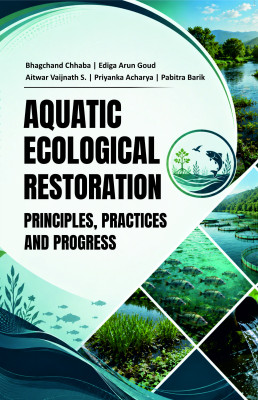
Aquatic Ecological Restoration: Principles, Practices & Progress provides a comprehensive overview of the scientific principles, practical approaches, and emerging innovations involved in restoring degraded aquatic ecosystems. Covering rivers, lakes, wetlands, estuaries, and coastal environments, the book highlights the growing ecological challenges caused by climate change, pollution, habitat destruction, biodiversity loss, and invasive species. It presents key restoration strategies including ecological engineering, habitat rehabilitation, ecosystem-based management, and sustainable conservation practices aimed at improving ecosystem resilience and environmental sustainability.
The volume also discusses planning and design of restoration projects, monitoring and evaluation techniques, ecosystem modelling, environmental auditing, and the use of modern assessment tools for ecosystem health analysis. Special emphasis is given to governance frameworks, environmental policies, and legal aspects supporting restoration initiatives. Designed for students, researchers, environmental professionals, and policymakers, this book serves as a valuable resource for understanding the science, management, and future directions of aquatic ecological restoration and sustainable aquatic resource management.
Dr. Bhagchand Chhaba is a distinguished aquatic environmentalist and expert in fisheries science. He holds a Ph.D. in Aquatic Environment Management from the University of Dr. Balasaheb Sawant Konkan Krishi Vidyapeeth, Dapoli. He is a Teaching Associate at LSPN, College of Fisheries (COF). With extensive experience in the field, he has authored over eight research papers on aquatic environment, toxicity, and aquaculture, along with more than 10 review papers in the fisheries domain. His expertise is widely recognized, having participated in numerous national and international seminars, where he has shared his insights on various aspects of aquatic science and environmental management.
Mr. Ediga Arun Goud is a passionate and distinguished expert in the dynamic field of fisheries. With a solid foundation in aquatic sciences, he earned his B.F.Sc. From Maharashtra Animal and Fishery Sciences University, Nagpur, before securing his M.F.Sc. with gold medal honours from Dr. Balasaheb Sawant Konkan Krishi Vidyapeeth, Dapoli. He is further advancing his expertise as a Ph.D. candidate in the Department of Aquaculture at the College of Fisheries, Ratnagiri. As a prolific researcher, he has published two highly regarded papers in top-tier international journals and contributed more than 26 influential articles to the field of fisheries. His scholarly work is complemented by his active participation in numerous national and international conferences.
Dr. Aitwar Vaijnath S. is an academician and researcher specializing in environmental and aquatic sciences. He obtained his doctoral degree from Karnataka Veterinary, Animal and Fisheries Sciences University, Bidar. His research interests include aquatic ecosystems, water quality analysis, coastal aquaculture, and emerging environmental concerns such as microplastic pollution. He is actively engaged in the study of ecological processes, biodiversity conservation, and environmental monitoring techniques related to aquatic environments. Through his academic and research contributions, he aims to enhance scientific understanding and promote sustainable management of aquatic resources. He has made significant scholarly contributions to the field of fisheries and aquatic sciences, having authored more than 22 articles and 15 book chapters, along with two books. In addition, he has published seven review papers and six research papers in reputed national and international journals. His work reflects a strong commitment to advancing research and education in fisheries and environmental science.
Dr. Priyanka Acharya is known for her profound exploration in aquaculture. Her work has been celebrated for her originality and new ideas. She has over ten published titles to her name. Her impactful work has been recognized in various national and international seminars and is being awarded. She has acquired a Ph.D. in Aquaculture from Odisha University of Agriculture and Technology, Odisha and is currently working in LSPN College of Fisheries, Kawardha, mentoring and teaching new aspiring students in the field of Fishery Science.
Dr. Pabitra Barik, Ph.D. (CIFE, Mumbai), is the Head of the Department of Aquatic Environment and Health Management at LSPN College of Fisheries, DSVCKV, Durg, Chhattisgarh. He is a distinguished scholar and researcher with more than twenty years of experience in the field of aquatic environment and health management. His research focuses on the innovative use of nanotechnology for environmental remediation, particularly in aquatic systems. Dr. Barik has made significant contributions to the field through his extensive research, authoring over 15 research papers on aquatic environment and health management, along with more than 20 publications in fisheries science. His pioneering work involves the synthesis and use of biogenic nanoparticles to reduce ammonia toxicity and control pathogenic microorganisms in aquatic environments. His work plays a major role in improving the health and productivity of aquatic ecosystems, supporting both environmental conservation and the fisheries sector.
Chapter 1. Introduction to Aquatic Ecological Restoration
Chapter 2. Effect of Climate Change on Eco-Degradation and Ways to Restore
Chapter 3. Bridging Human Design and Nature: The Principles of Ecological Engineering
Chapter 4. Planning and Designing Ecological Restoration Projects
Chapter 5. Invasive Species Control in Aquatic Restoration
Chapter 6. Monitoring and Evaluation of Ecological Restoration
Chapter 7. Ecosystem Health Cards: A Tool for Monitoring and Reporting Ecosystem Condition
Chapter 8. Ecosystem Modelling and Auditing: Tools for Sustainable Environmental Management
Chapter 9. Governance and Legal Framework for Ecological Restoration
Chapter 10. Restoring Aquatic Ecosystems: Comprehensive Approaches, Emerging Challenges, and Innovative Solutions for Freshwater and Marine Resilience.