Keywords
Blue Economy, Sustainable Blue Economy, Ocean Economy, Marine Ecosystem Services, Blue Carbon Ecosystems, Coastal Ecosystems, Marine Biodiversity, Abiotic Marine Resources, Biotic Marine Components, Ocean Governance, Marine Policy Frameworks, Environmental Legislation Marine, Climate Change Marine Impact, Coastal Resource Management, Marine Conservation Strategies, Ocean Technologies, Blue Economy Technologies, Sustainable Fisheries Management, Marine Pollution Control, Coastal Sustainability PracticesThe Blue Economy: Driving Sustainability and Inclusive Development
edited by: Abhijit Mitra,Joystu Dutta & Arpita SahaLength: 152 mm | Breadth: 9.5 mm | Height: 229 mm | Imprint: NIPA | Weight: 470 GMS
This book will be available from 15-Aug-2026
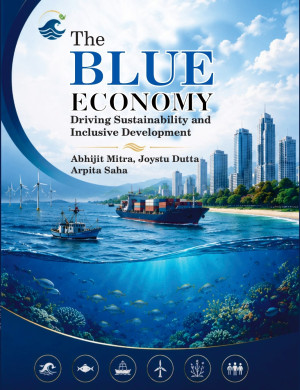
The Blue Economy: Driving Sustainability and Inclusive Development explores the urgent need for sustainable management of natural and marine resources in the face of climate change, environmental degradation, and growing socio-economic challenges.
The book highlights key issues such as food security, water scarcity, pollution, ecosystem degradation, and unplanned development while emphasizing the importance of ecological stewardship and inclusive growth. Integrating scientific knowledge, environmental governance, and real-world case studies, this volume presents the Blue Economy as a transformative approach for balancing economic development with marine and coastal conservation. It serves as a valuable resource for researchers, students, policymakers, and environmental practitioners.
Dr. Abhijit Mitra is the Director of Research at Techno India University and former Professor and Head of the Department of Marine Science at University of Calcutta. He has been actively engaged in the field of Oceanography since 1985. He earned his Ph.D. in 1994 as a NET-qualified scholar after receiving the Gold Medal for securing first position in M.Sc. from the University of Calcutta.
Dr. Mitra has worked with Calcutta Port Trust and World Wide Fund for Nature in various capacities, conducting research on environmental science, biodiversity conservation, climate change, and carbon sequestration. He has published around 745 scientific papers in national and international journals and authored 62 postgraduate-level books.
He is a member of several international committees, including IUCN and SIOS, and has successfully completed nearly 16 research projects related to biodiversity loss in fisheries, coastal pollution, alternative livelihoods, climate change, and carbon sequestration.Dr. Mitra has served as a visiting faculty member and invited speaker at universities in Singapore, Kenya, Oman, and the USA. In 2008, he was invited as a Visiting Fellow at University of Massachusetts Dartmouth to deliver lectures on climate change. He has also successfully guided 58 Ph.D. scholars. His areas of expertise include environmental science, mangrove ecology, sustainable aquaculture, alternative livelihoods, climate change, and carbon sequestration.
Dr. Joystu Dutta is a young academician and researcher currently serving as Senior Assistant Professor and Head of the Department of Environmental Science at Shri Govind Guru University. He is recognized for his intellectual rigor, professional enthusiasm, and commitment to excellence in teaching, research, and institutional leadership.
An accomplished environmental management professional, Dr. Dutta specializes in climate change policy design, environmental governance, and sustainability planning. He actively contributes to the development and implementation of strategies aimed at reducing the ecological footprint of organizations and institutions.
He possesses over two years of experience in development-related communication in both field-based and desk-based environments. His expertise extends to internal communications, employee engagement, Corporate Social Responsibility (CSR), branding, and marketing communications. He is also known for his strong advocacy, stakeholder engagement, networking abilities, and contributions to outreach programs, capacity-building initiatives, team operations, and event management.
Dr. Dutta has published more than 55 research papers and authored over seven books through national and international publishers. He has supervised one Ph.D. thesis submission and mentored numerous postgraduate dissertations and consultancy projects, effectively bridging academic knowledge with practical environmental action.
Dr. Arpita Saha is presently holding the position of Assistant Professor, Department of Oceanography, Techno India University, West Bengal. She obtained her Ph.D. degree in 2020 from Techno India University, West Bengal. She has to her credit about 20 scientific publications, several book chapters, and 10 publications in conference proceedings in the sphere of Environmental Science, Aquaculture, Alternative Livelihood, and Environmental Biology. She has participated in various national and international conferences, seminars, workshops, and webinars.
Chapter 1.Global overview of Blue Economy
Chapter 2.Ecological Cradles of Blue Economy
Chapter 3.Biotic components of Blue Economy
Chapter 4.AbiotiChapterc compartments of Blue Economy
Chapter 5.Threats and Challenges to Blue Carbon Ecosystems and Economy
Chapter 6.Legislations and Global Policies
Chapter 7.Common Instruments and Technologies Related to Blue Economy
Chapter 8.Brain Churners