Keywords
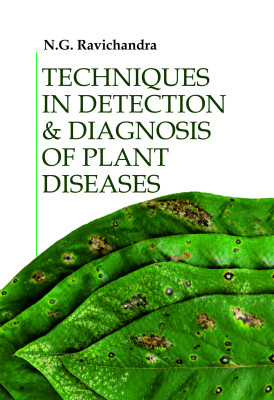
plant pathogen detection, plant disease diagnosis, plant pathology techniques, molecular plant pathology, PCR plant disease detection, qPCR plant diagnostics, LAMP technique plant pathogens, ELISA plant virus detection, biochemical tests plant pathogens, microscopic plant pathogen identification, serological assays plant diseases, cultural methods plant pathology, nucleic acid plant diagnostics, next generation sequencing plant pathogens, biosensors plant disease detection, GC-MS plant pathogen analysis, LC-MS plant disease profiling, flow cytometry plant pathology, AI plant disease detection, machine learning crop disease identificationTechniques in Detection and Diagnosis of Plant Diseases
authored by: N.G. RavichandraLength: 152 mm | Breadth: 23 mm | Height: 229 mm | Imprint: NIPA | Weight: 720 GMS
The book is a comprehensive and advanced textbook designed to provide in-depth knowledge of modern plant pathology diagnostics. The book systematically covers a wide range of detection techniques, starting from traditional visual symptom analysis to highly advanced molecular and artificial intelligence-based methods. It includes biochemical tests, microscopic techniques, cultural studies, serological assays, and nucleic acid-based methods such as PCR, qPCR, LAMP, and next-generation sequencing.
The book also explores emerging technologies like biosensors, phage display, GC-MS, LC-MS, and flow cytometry for accurate pathogen identification. Special emphasis is given to modern innovations such as drone-based disease detection, machine learning, and deep learning applications in plant disease diagnosis.
Aligned with current scientific advancements, the book integrates both phenotypic and genotypic approaches for precise identification of plant pathogens. It serves as a valuable resource for students, researchers, and professionals in plant pathology, agriculture, and biotechnology, supporting efficient disease management and sustainable crop protection strategies.
N.G. Ravichandra, Professor of Plant Pathology and Scheme Head, All India Co-ordinated Research Project (Nematodes), Department of Plant Pathology University of Agricultural Sciences, GKVK, Bengaluru, Karnataka, India, is involved in teaching, research and extension activities. He has been a major advisor to the Post-Graduate students majoring in Plant Pathology for M.Sc., (Agri.) and Ph.D. Degree Programmes.
Dr. N.G. Ravichandra has authored nine text books in Plant Pathology & Nematology, has 260 scientific research papers published in National and International journals, contributed chapters to twelve text books, edited five books and also authored ten books in Kannada language.
Dr. N.G. Ravichandra has identified and reported a new species of root-knot nematode (Meloidogyne enterolobii) on Guava and a new host, Lac plant (Flemingia semialalta L.) for root-knot nematode (Meloidogyne incognita) from Karnataka. These are the new and first reports from India.
Dr. N.G. Ravichandra has been bestowed with three National awards for his research accomplishments and contributions. He has been recognized as the International Editor and Reviewer for three prestigious International Journals and National Editor for the eminent ‘Indian Phytopathology’ Journal. He has developed eight technologies for the management of root-knot nematodes infecting tomato, brinjal and rice, which have been included in the Package of Practices of University of Agricultural Sciences, Bengaluru, Karnataka, India.
Dr. N.G. Ravichandra has operated research projects funded by the Department of Bio-Technology & Indian Council of Agricultural Research, New Delhi, India as Principal Investigator and Co-Principal Investigator; participated and presented original research papers on various aspects of plant diseases in National and International conferences; undergone advanced training programs sponsored by the Department of Biotechnology & Indian Council of Agricultural Research, New Delhi, India; an active life member of professional societies including Nematological Society of India, Indian Phytopathological Society, Society of Mycology & Plant Pathology, National Environmental Science Academy, Institute of Agricultural Technology, Glacier Journal Research Foundation and Institute of Scholars.
Chapter 1. Detection of Plant Pathogens
Chapter 2. Detection of Plant Pathogens Based on Biochemical Tests
Chapter 3. Detection of Plant Pathogens Using Microscopic Techniques
Chapter 4. Detection of Plant Pathogens by Cultural Studies
Chapter 5. Detection of Plant Pathogens by Biological Assays
Chapter 6. Detection of Plant Pathogens by Serological Assays
Chapter 7. Nucleic Acid Based Techniques to Detect Plant Pathogens
Chapter 8. Phenotypic and Genotypic Tests for Identification of Plant Pathogens
Chapter 9. Molecular Identification
Chapter 10. Volatile Compounds Profiling by Using GC-MS and LC-MS; FAME Analysis, Fluorescence In-Situ Hybridization (FISH), Flow Cytometry
Chapter 11. Phage Display Technique and Biosensors for Detection of Plant Pathogens
Chapter 12. Genotypic Tools Such as Genome / Specific Gene Sequence Homology Comparison by BLAST (NCBI and EMBL)
Chapter 13. Electron Microscopy Techniques of Plant Virus Detection and Diagnosis
Chapter 14. Artificial Intelligence (AI) to Detect Plant Pathogens