Keywords
molecular markers, plant biotechnology, laboratory equipment, dna history, gel electrophoresis, pcr machines, rapd, rflp, aflp, microsatellite, issr, scar, snp, marker assisted selection, qtl mappingMolecular Markers and Plant Biotechnology
authored by: Rukam S. Tomar, Manoj V. Parakhia, Sunil V.Patel & B.A. GolakiyaLength: 191 mm | Breadth: 41.6 mm | Height: 235 mm | Imprint: NIPA | Weight: 1390 GMS
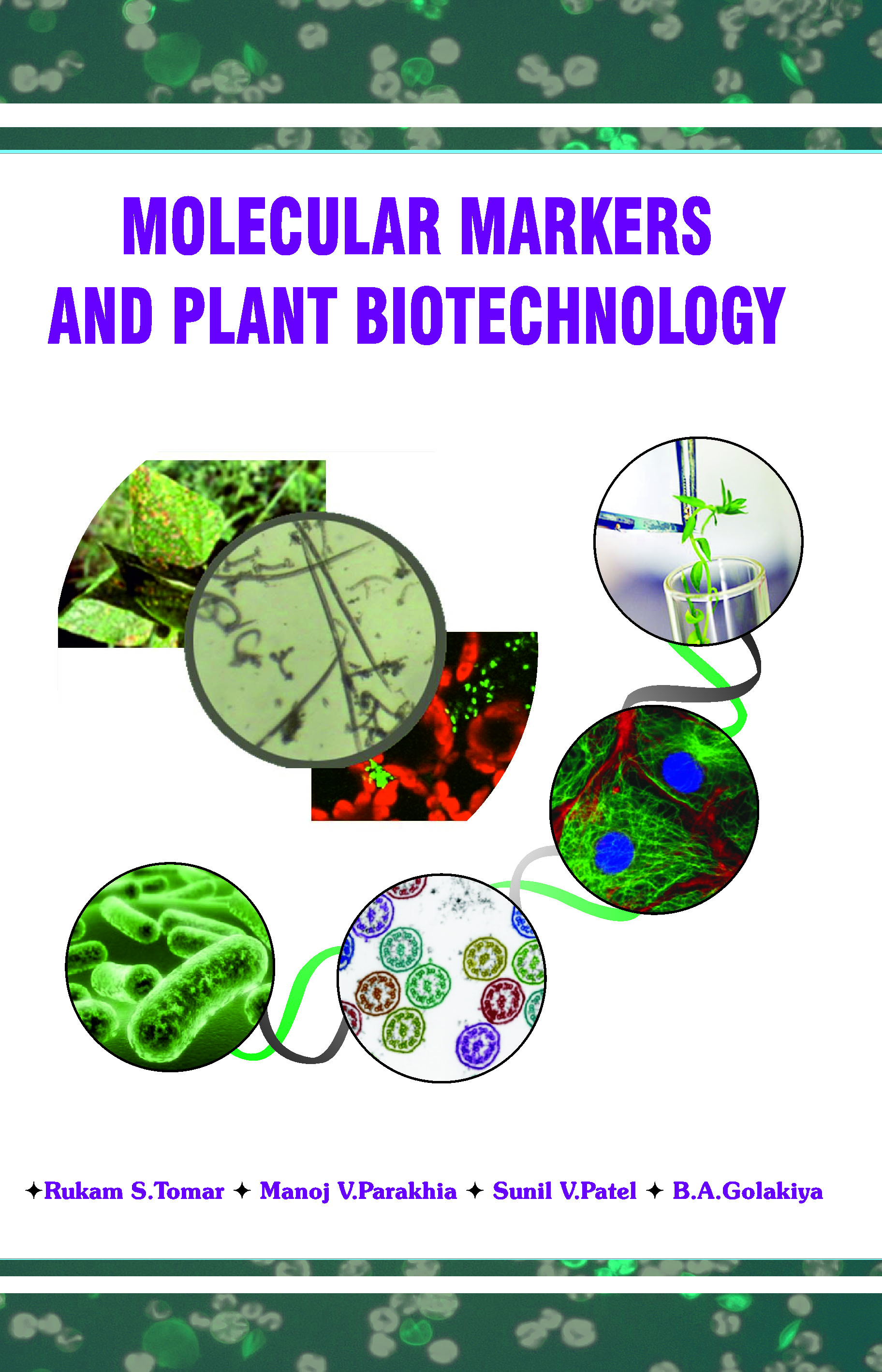
The book "Molecular Markers and Plant Biotechnology" is a comprehensive collection of molecular marker-based techniques, presented in 40 chapters and accompanied by 578 pages of detailed information and figures. This essential resource is a must-have for those working in the field of biotechnology. In addition to the theoretical content, the book also includes practical equipment descriptions to supplement laboratory work. The inclusion of laboratory safety rules at the beginning of the text is a wise decision. The appendices provide additional support with basic calculations, principles for preparing reagents, and an abbreviations and glossary section that demonstrates the attention to detail in the text's preparation. This indispensable book is an absolute necessity for both laboratory and classroom settings in the field of biotechnology.
Rukam S. Tomar: Department of Biochemistry, Junagarh Agricultural University, Junagarh 362 001, Gujarat. Professor
Manoj V. Parakhia:Department of Biochemistry, Junagarh Agricultural University, Junagarh 362 001, Gujarat, Professor
Sunil V.Patel: Department of Biochemistry, Junagarh Agricultural University, Junagarh 362 001, Gujarat. Professor
B.A. Golakiya: Department of Biochemistry, Junagarh Agricultural University, Junagarh 362 001, Gujarat
1. Milestones in DNA history and biotechnology. 2. Equipments required in a molecular marker laboratory. 3. Isolation, purification and quantification of genomic DNA from plants. 4. Isolation, purification and quantification of RNA from plants. 5. Electrophoresis. 6. Molecular weight markers for gel electrophoresis. 7. Polycrylamide Gel Electrophoresis (PAGE). 8. Gel electrophoresis of protein. 9. Isoenzyme. 10. Extraction of DNA fragments from Agarose Gel. 11. Why molecular markers? 12. Restriction enzyme digestion of DNA and its Agarose Gel Electrophoresis. 13. Thermocyclers (PCR Machines). 14. Modifications of basic PCR technique. 15. Random amplified polymorphic DNA (RAPD). 16. Restriction Fragment Length Polymorphism (RFLP). 17. Amplified Fragment Length Polymorphism (AFLP). 18. Simple sequence repeats (Microsatellite). 19. Variable number of Tandem repeats (Minisatellite). 20. Inter Simple Sequence Repeat (ISSR). 21. Sequence Characterized Amplified Region (SCAR). 22. Cleaved Amplified Polymorphic Sequence (CAPS). 23. Single-Strand Conformation Polymorphism (SSCP). 24. Retrotransposon-based markers (S-SAP, IRAP, REMAP, RBIP, RGAS, SNP). 25. Silver staining. 26. Basics of marker assisted selection in crop plants. 27. Mapping populations. 28. QTL mapping. 29. Southern blotting. 30. Western blotting. 31. Northern blotting. 32. Eastern blotting. 33. DNA sequencing and designing of primers. 34. Gene transfer to plant. 35. Fluorescent in Situ Hybridization (FISH). 36. Genotypic Barcoding. 37. mtDNA. 38. MicroRNA. 39. Graphical approach to calculate molecular weights of DNA/protein fragments. 40. Calculation of similarity index values and construction of Dendrogram using NTSYSpc 2.0.